


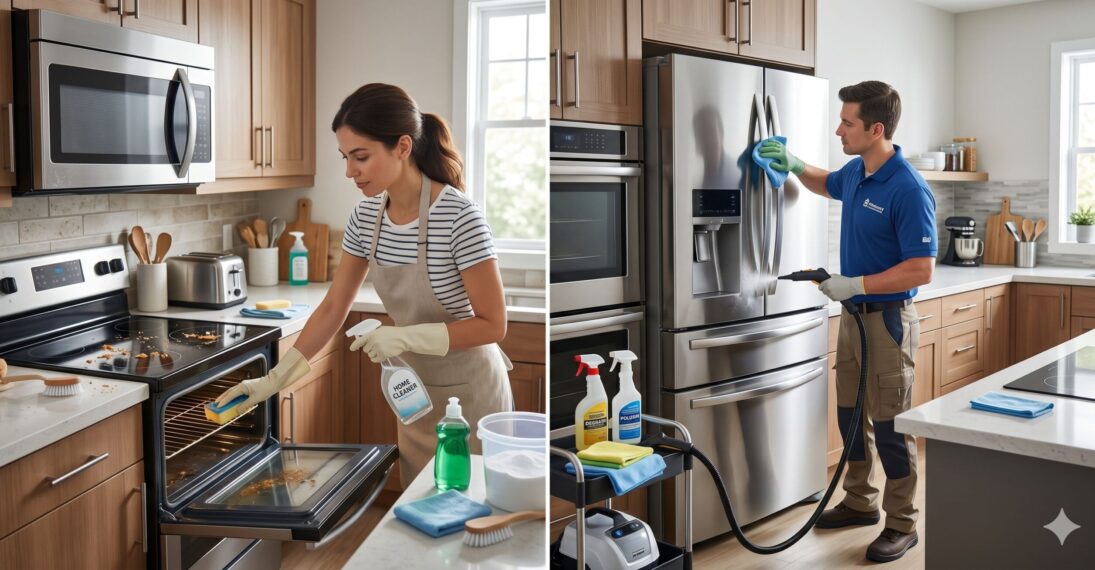
Professional vs. DIY Cleaning: When can you handle it yourself, and when is it time to call a pro?
Maintaining a clean kitchen chimney is about more than just aesthetics; it’s about fire safety, air quality, and protecting your expensive appliances. But as a homeowner, how do you know if a quick soak in the sink is enough, or if you’re looking at a job for the experts?
Here is the breakdown of when you can take the DIY route and when it’s time to pick up the phone.
If the job requires a ladder, a respirator, or more than four hours of your Saturday, the value of a professional’s time and specialized result far outweighs the cost of the service.
🧽 The DIY Approach: Routine Maintenance
If you are consistent with your cleaning, a DIY approach is perfectly effective for surface-level grease.
When to do it yourself:
- Monthly Maintenance: If you cook daily, a monthly degreasing prevents buildup from hardening.
- Light Cooking Habits: If your meals mostly involve steaming or boiling rather than heavy frying.
- Mesh Filters: Most aluminum mesh filters are dishwasher-safe or can be cleaned with a soak in hot water, baking soda, and dish soap.
The DIY Checklist:
- Soak: Submerge filters in boiling water with a heavy-duty degreaser.
- Scrub: Use a non-abrasive brush to clear the pores.
- Dry: Ensure filters are 100% dry before reinstalling to prevent motor rust.
🛠️ The Professional Approach: Deep Restoration
Sometimes, the grease goes deeper than the filter. Professional cleaning involves specialized tools and chemicals that handle the “hidden” parts of your ventilation system.
When to call a pro:
- The “Sticky” Test: If the filters remain sticky or yellowed even after a deep DIY scrub, the grease has carbonized.
- Motor Noise: If your chimney is vibrating or making more noise than usual, grease may have accumulated on the internal motor blades, throwing them out of balance.
- Visible Smoke: If smoke is lingering in the kitchen despite the fan being on “High,” there is likely a blockage in the ductwork.
- After 6–12 Months: Regardless of DIY efforts, a professional should inspect the internal housing and ducting annually to prevent fire hazards.
📊 At a Glance: Which do you need?
Feature | DIY Cleaning | Professional Service |
Frequency | Every 2–4 weeks | Every 6–12 months |
Depth | Surface filters only | Filters, motor, housing, and ducts |
Tools | Soap, water, brush | Industrial degreasers, vacuum suction |
Goal | Daily hygiene | Fire prevention & appliance longevity |
💡 The Verdict
Sometimes, the grease goes deeper than the filter. Professional cleaning involves specialized tools and chemicals that handle the “hidden” parts of your ventilation system.
When to call a pro:
- The “Sticky” Test: If the filters remain sticky or yellowed even after a deep DIY scrub, the grease has carbonized.
- Motor Noise: If your chimney is vibrating or making more noise than usual, grease may have accumulated on the internal motor blades, throwing them out of balance.
- Visible Smoke: If smoke is lingering in the kitchen despite the fan being on “High,” there is likely a blockage in the ductwork.
- After 6–12 Months: Regardless of DIY efforts, a professional should inspect the internal housing and ducting annually to prevent fire hazards.